
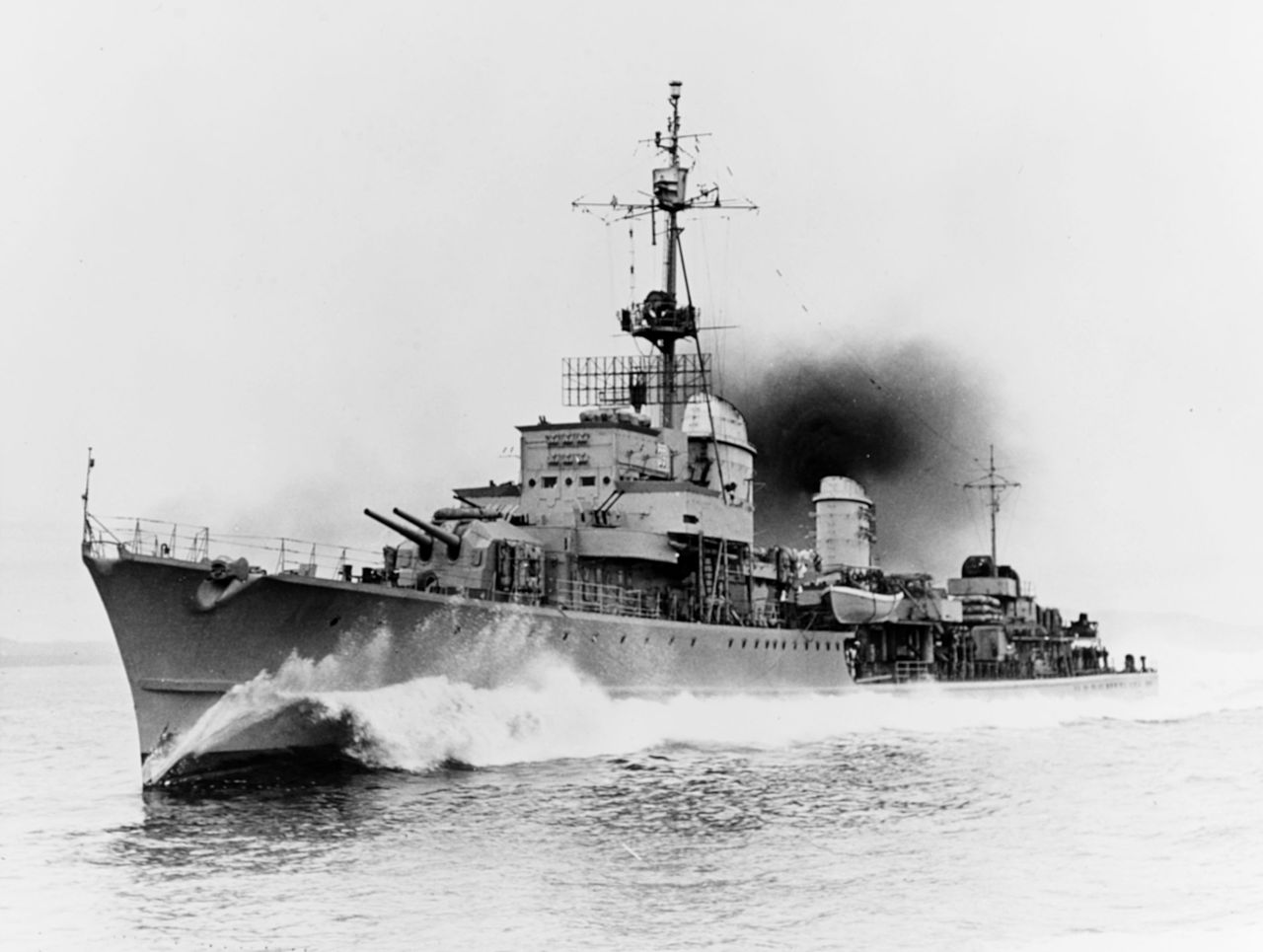
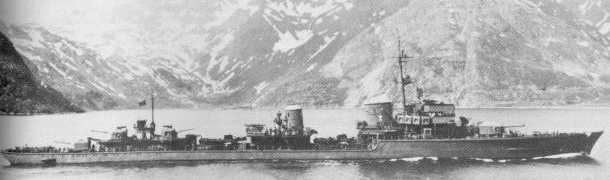
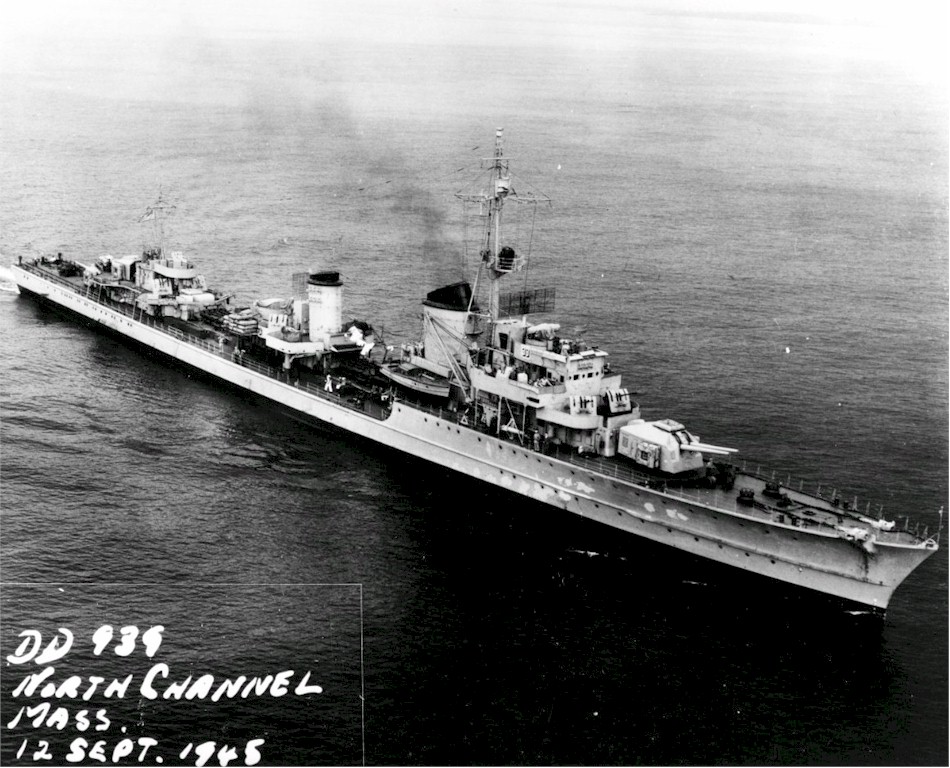
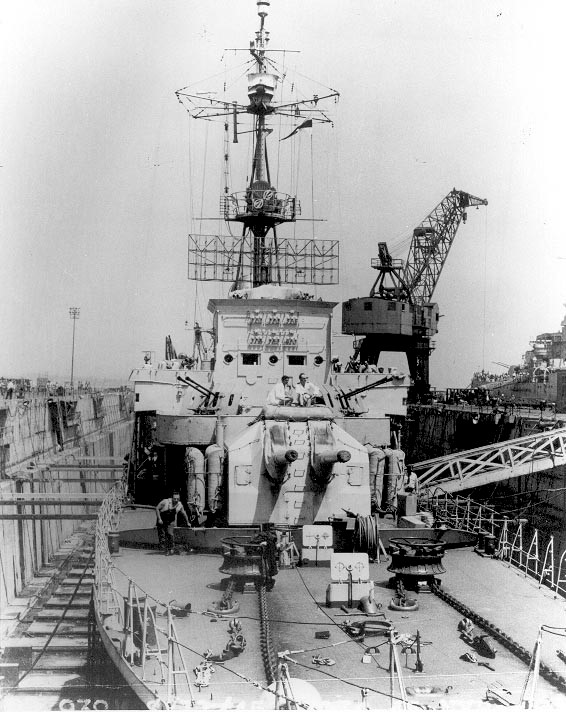
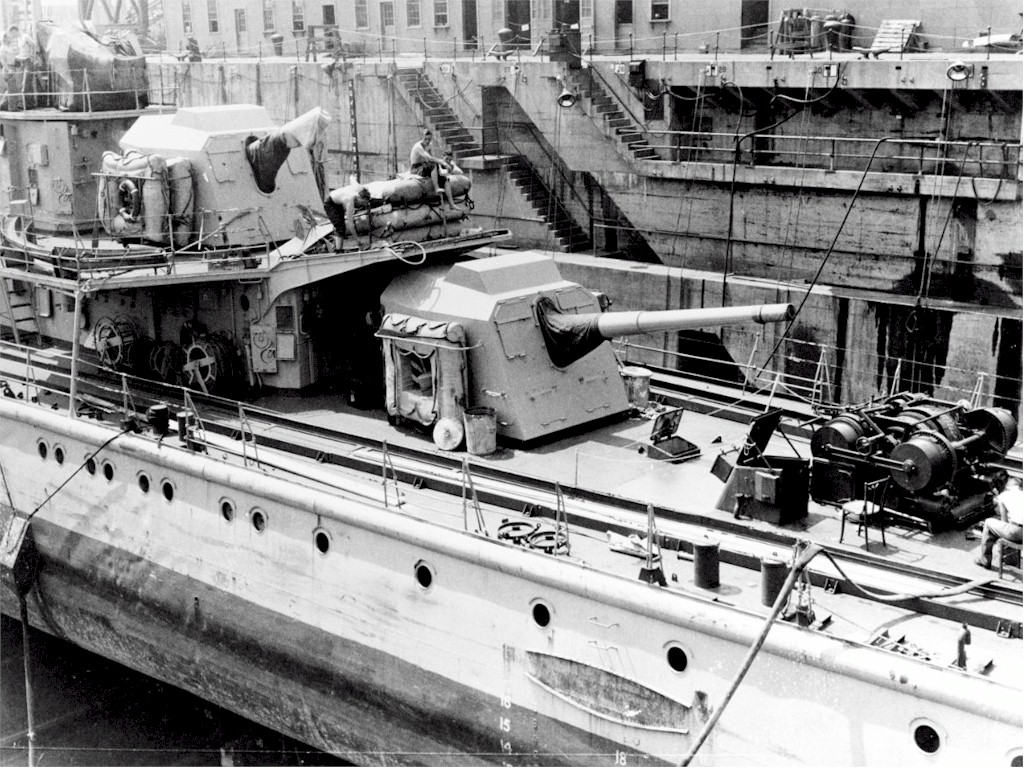
This was a "Torpedo Boat Cannon" used on the German "Narvik" class destroyers (Type 36A and Type 36A Mod).
Although this was a powerful gun for a destroyer, it had a slow rate of fire for a destroyer weapon and was really not suitable for such a small ship. The heavy weight of the shells was also a problem as the gun mountings lacked power assist, meaning that the shells had to be manually fed into the breech. As these guns were used primarily in open mountings, bad weather greatly hampered their operation.
When these destroyers were modified to carry a twin mount forward, the additional bow weight caused them to become very "wet" ships. However, these problems were somewhat offset by the fact that the twin mount was fully enclosed and had a high maximum elevation, thus allowing for limited use against aircraft.
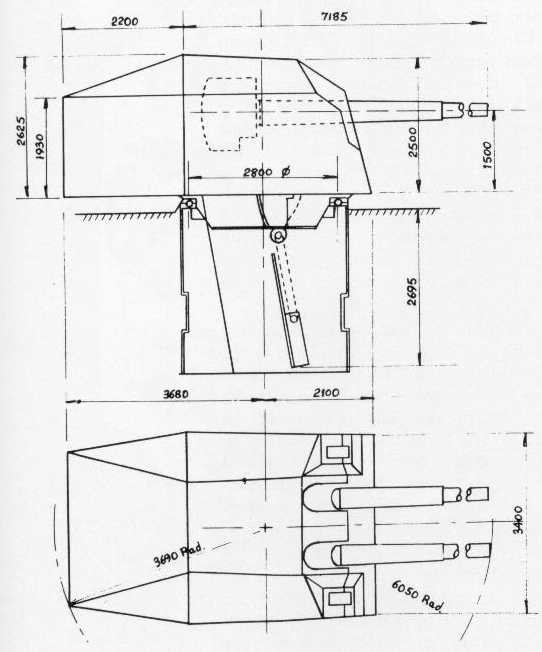
Construction differed from other German 15 cm guns in that the loose barrel could be changed from the muzzle end and that the breech opened horizontally. Other than that, the design was similar to other guns in this caliber and consisted of jacket, loose barrel, breech piece and semi-automatic breech that was opened manually to load the first round. The KC/36 was used in single mountings while the KC/36T was used in twin mountings. The KC/36T had a breech weight in order to move the center of gravity towards the rear, which gave a more compact gunhouse and lower trunnion height while still being able to achieve higher elevations.
The 15 cm (5.9") was the standard caliber used on most German capital ships and cruisers since the turn of the century. The capital ships used this gun size as their secondary weapons whereas the light cruisers and the "Narvik" class destroyers had these as their main weapons.
All German 15 cm guns had an actual bore diameter of 14.91 cm (5.87 in).
| Designation | Guns for Single Mountings: 15 cm/55 (5.9") TBts KC/36
Guns for Twin Mountings: 15 cm/55 (5.9") TBts KC/36T |
|---|---|
| Ship Class Used On | Prototypes tested on Type 34 Bruno Heinemann (Z8) for a brief time
Type 36A and 36A (mod) "Narvik" (Z23 and Z37) classes Light Cruiser Emden was rearmed with these guns in 1942 Used in some merchant cruisers and supply ships Planned for Z40/SP1 Scout Cruiser Class and Schlachtschiff "O" Class |
| Date Of Design | 1936 |
| Date In Service | KC/36: 1939
KC/36T: 1942 |
| Gun Weight | KC/36: 15,873 lbs. (7,200 kg)
KC/36T: 18,880 lbs. (8,564 kg) |
| Gun Length | 282.1 in (7.165 m) |
| Bore length | 268.3 in (6.815 m) |
| Rifling Length | 220.0 in (5.587 m) |
| Grooves | (44) 0.069 in deep x 0.242 in (1.75 mm x 6.14 mm) |
| Lands | 0.177 in (4.5 mm) |
| Twist | Increasing RH 1 in 45 to 1 in 30 |
| Chamber Volume | 1,294 in3 (21.2 dm3) |
| Rate Of Fire | 7 - 8 rounds per minute |
| Type | Separate |
|---|---|
| Projectile Types and Weights 1 2 3 | HE L/4,5 base fuze: 99.9 lbs. (45.3 kg)
HE L/4,6 nose fuze 4: 99.9 lbs. (45.3 kg) HE L/4,6 nose fuze, AA 5: 98.5 lbs. (44.7 kg) Illum L/4,3: 90.4 lbs. (41 kg) |
| Bursting Charge 6 | HE L/4,5 base fuze: 6.68 lbs. (3.029 kg) TNT 7 HE L/4,6 nose fuze: 8.02 lbs. (3.640 kg) TNT 8 HE L/4,6 nose fuze AA: 8.02 lbs. (3.640 kg) TNT 8 |
| Projectile Length 9 | HE L/4,5 base fuze: 26.7 in (67.9 cm)
HE L/4,6 nose fuze: 27.6 in (70.0 cm) HE L/4,6 nose fuze AA: N/A Illum L/4,3: 25.4 in (64.5 cm) |
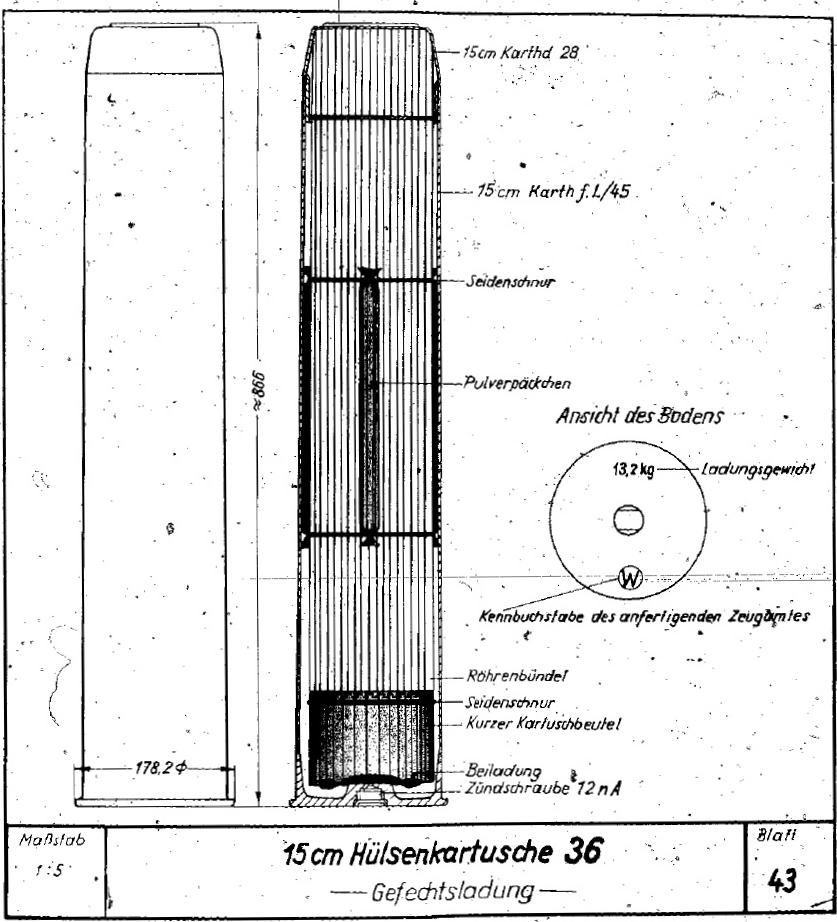
| Propellant Charge 10 | 29.76 lbs. (13.5 kg) RPC/38 (825 x 7.5/3) |
| Cartridge Case Size and Weight | 150 x 865 mm
Empty: 18.83 lbs. (8.54 kg) Loaded: 51.8 lbs. (23.5 kg) |
| Muzzle Velocity | 2,740 fps (835 mps) |
| Working Pressure | 19.0 tons/in2 (3,000 kg/cm2) |
| Approximate Barrel Life | 1,600 rounds |
| Ammunition stowage per gun | 120 rounds 11 |
- ^The sources below differ regarding the ammunition used for these weapons. For the most part, I have relied upon the data in M.Dv. Nr. 198 and in "German Destroyers of World War Two."
- ^A Note on Sources: "Naval Weapons of World War Two" states that a reduced weight HE projectile of 88.2 lbs. (40 kg) was developed for destroyer use. However, no other source agrees with this and a search of Krupp records by Peter Lienau failed to support this claim. It is possible that this was a planned change that never made it off the drawing board.
- ^
Actual German designations HE L/4,5 base fuze 15 cm Spgr. L/4,4 Bdz (m.Hb) HE L/4,6 nose fuze 15 cm Spgr. L/4,5 Kz (m.Hb) HE L/4,6 nose fuze, AA 15 cm Spgr L/4,5 Kz (m.Hb) – Haube abgeschraubt [unscrewed cap] Illumination L/4,3 15 cm Lg L/4,3 - ^German HE Nose Fuzed projectiles with ballistic caps had a rod between the nose of the shell and the fuze to improve performance when striking obliquely. See details on 12.7 cm SK C/34 datapage.
- ^The AA projectile was the same as the standard HE Nose Fuze projectile, but had a time fuze in place of the instantaneous impact fuze and did not use the ballistic cap (windshield). See Anti-Aircraft Projectiles for a sketch.
- ^Burster weights (reiner Sprengstoff) for World War II projectiles from M.Dv. Nr. 198.
- ^Burster for HE base fuze made from Fp 1, 5, and 10.
- ^APC and HE ballistic caps had a radius of 8.5 calibers. The tangent of the ballistic cap to the shell body was inclined at 5 degrees, which resulted in a projectile with a short overall length.
- ^Propellant weights differ in many references and even in official documents such as the M.Dv. Nr. 170 and M.Dv. Nr. 190 series. This is because different loading weights were used depending upon the powder grain size utilized to make up the charge. The weights in this table are for the powder grain specified.
- ^Destroyer outfits included nose and base fuzed HE with and without tracer and 80 illuminating shells per ship.
| Elevation | Distance |
|---|---|
| 30 degrees | 24,360 yards (21,950 m) |
| 47 degrees
(Twin Mount only) |
25,700 yards (23,500 m) |
| Designation 1a | Single Mount 2a 3a Type 36A (4), Type 36A (mob) (3) and Emden (8): Tbts LC/36 Twin Mount
|
|---|---|
| Weight | Single Mount 2a Hand worked: 35,494 lbs. (16,100 kg) Electric/hydraulic: 43,080 lbs. (19,540 kg) Twin Mount
|
| Elevation | Single Mount: -10 / +30 degrees 5a Twin Mount: -10 / +65 degrees |
| Elevation Rate | Single Mount: Manual control, 1.9 degrees per handwheel revolution
Twin Mount: 8 degrees per second |
| Train | Single Mount: 360 degrees 6a Twin Mount: +145 / -145 degrees |
| Train Rate | Single Mount: Manual control, 3 degrees per handwheel revolution
Twin Mount: 8 degrees per second |
| Gun recoil | Single Mount: 16.7 in (42.5 cm)
Twin Mount: 17.3 in (44 cm) |
- ^As built, Type 36A destroyers (Z23 to Z30) and Type 36A (mob) destroyer Z31 had four single mountings. During 1942-43, the destroyers Z23, Z24, Z25 and Z31 were modified to have one twin and three single mountings. The later Type 36A (mob) destroyers (Z32 to Z34 and Z37 to Z42) were completed with one twin and three single mountings. Some of these guns were removed later in the war under "Operation Barbara" which was a program to increase AA weapons.
- ^2.12.2There were two types of single mounting, both with the same designation. The earlier one had only manual elevation and training while the later one had Pittler-Thoma electric-hydraulic gear. The former had a 6-10 mm shield and the latter had a 20-40 mm shield. This difference in the shield thickness makes up the bulk of the weight difference. The twin mounting also used Pittler-Thoma gear.
- ^Z28 was rebuilt during the war to have two single mountings forward, the only Type 36A to have this arrangement. This modification was needed as the normal amidships mounting had been suppressed in order to provide additional accommodations for staff.
- ^The LDrh LC/38 twin mounting was originally designed for the "O" class battlecruisers and the Z40/SP1 scout cruisers. After these ships were cancelled, the mountings were then used on the Type 36A (mob) destroyers. The guns in this mount shared a common cradle and the gun axes were about 42 in (106 cm) apart. Each gun had an Ardelt electric hoist and there were ten ready rounds stored in the rear of the mounting in water-tight containers.
- ^A Note on Sources: "German Warships 1815-1945" says that the single mounting had an elevation range of -19 / +48 degrees, but a careful examination of photographs and sketches of the mounting throws doubt on this figure and no other source that I have found supports this value. I believe the lower maximum elevation range given above of -10 to +30 degrees for the single mount to be correct.
- ^The LC/36 single mountings could make one complete revolution in either direction from the mid (fore and aft) position for a total of 720 degrees of train. Firing arc was about -150 / +150 degrees.
"Naval Weapons of World War Two" by John Campbell
"German Warships 1815-1945" by Erich Gröner
"German Naval Guns: 1939 - 1945" by Miroslaw Skwiot
"German Destroyers of World War Two (2nd Edition)" by M.J. Whitley
---
"Munitionsvorschriften für die Kriegsmarine - Hülsenkartusche" M.Dv. Nr. 190,4A1 by Oberkommando der Kriegsmarine
"Übersicht über die für die Marinegeschütze und deren Abk K zu verwendende Munition und ihre Einzelteile einschließlich Salut-
und Manöverladungen" M.Dv. Nr. 198 by Oberkommando der Kriegsmarine
---
Special help from Peter Lienau and Thorsten Wahl
17 February 2007 - Benchmark
09 September 2010 - Minor additions
04 June 2011 - Added better description of gun construction
23 March 2013 - Corrected typographical error
07 February 2019 - Converted to HTML 5 format, reorganized notes and added information from M.Dv. Nr. 170,30
21 March 2019 - Added sketch of Main Charge (Hülsenkartusche) from M.Dv. Nr. 190,4A1, added overhead and stern views of Z39
23 April 2019 - Corrected typographical error
26 August 2019 - Added link to AA Projectile section and bow photograph of Z39
16 November 2019 - Corrected typographical error
22 August 2024 - Added ammunition information
01 March 2025 - Minor changes