
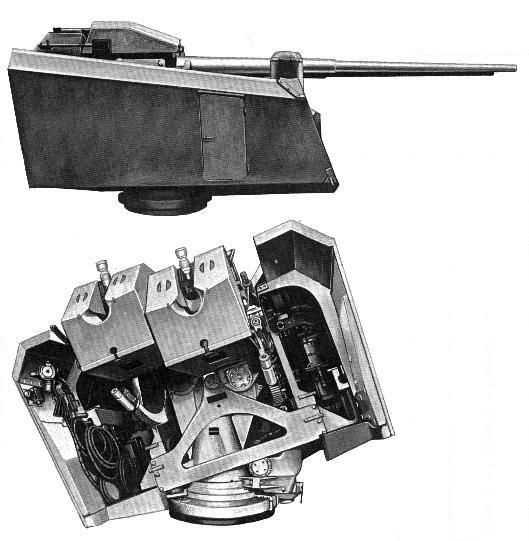
This weapon was used primarily as AAA on cruisers and capital ships, although it could be used against surface targets. A reasonably good weapon, but the training and elevation rates of their mountings were rather slow. Replaced the older 8.8 cm (3.5") SK C/31 on newer ships.
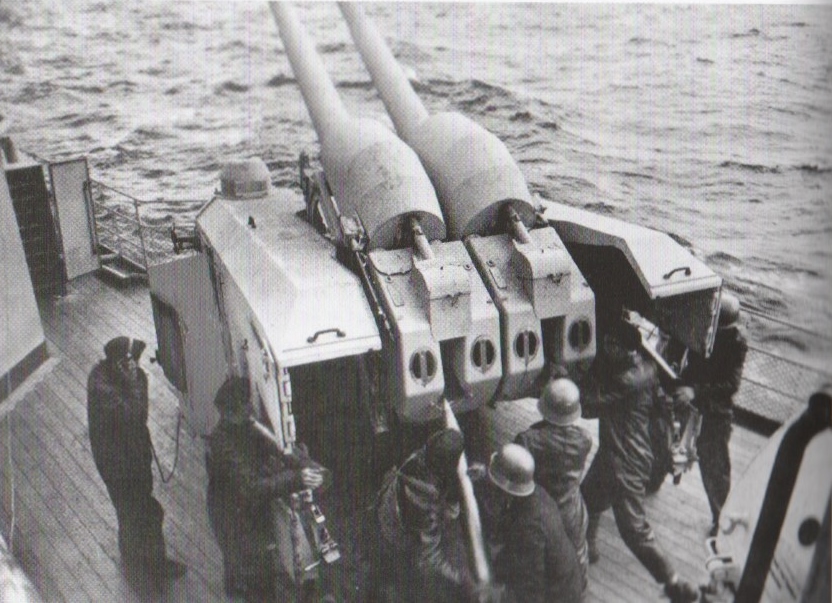
Note the triaxial mounting in the picture below. This was intended to be able to compensate for the motion of the ship and so maintain target lock. Unfortunately, this mounting proved to be susceptible to electrical faults as it was not sufficiently waterproofed and the mountings were opened to the weather. These earlier mounts had limited RPC. The "H" class battleships were to have much improved enclosed mounts with full RPC, but these ships were never completed.
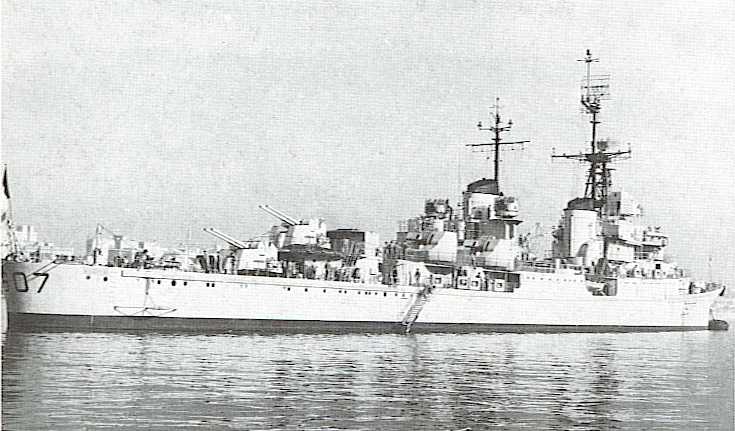
An interesting post-war usage of these guns was on the French destroyers Guichen and Châteaurenault. These were the former Italian light cruisers Scipione Africano and Atilio Regolo which were ceded to France in 1948. All of their Italian armament was removed and they were then rearmed with six German 10.5 cm/65 guns and ten French 57 mm/60 AA guns. A single twin mounting was also added to the gunnery training ship Albatros.
Earlier guns were of loose barrel construction, but later guns designated as SK C/33 na had a two-piece barrel with a heavier jacket and were considerably lighter. A late war design that was designated as SK C/33 nT had the two pieces redesigned as a forward loose muzzle piece and the rear part as a short loose liner.
| Designation | 10.5 cm/65 (4.1") SK C/33
10.5 cm/65 (4.1") SK C/33 na 10.5 cm/65 (4.1") SK C/33 nT |
|---|---|
| Ship Class Used On | Germany
Capital Ships and Cruisers: Deutschland, Scharnhorst, Bismarck, Admiral Hipper and Prinz Eugen classes U-Boat Depot Ships: Bauer class S-Boat Depot Ships: Lüderitz and Nachtigal classes as rearmed Planned for "H" class battleships, Graf Zeppelin class and Seydlitz aircraft carriers France
|
| Date Of Design | 1933 |
| Date In Service | 1935 |
| Gun Weight 1 | SK C/33: 10,053 lbs. (4,560 kg)
SK C/33 na: 9,336 lbs. (4,237 kg) SK C/33 nT: N/A |
| Gun Length oa | 269 in (6.84 m) |
| Bore Length | 249.9 in (6.348 m) |
| Rifling Length | 217.8 in (5.531 m) |
| Grooves | (36) 0.051 in deep x 0.2165 in (1.3 mm x 5.5 mm) |
| Lands | 0.144 in (3.66 mm) |
| Twist | Increasing RH 1 in 55 to 1 in 35 |
| Chamber Volume | 446 in3 (7.31 dm3) |
| Rate Of Fire | 15 - 18 rounds per minute |
- ^The earlier loose-barrel weighed 2,370 lbs. (1,075 kg) while the later two-piece barrel for the na weighed 1,653 lbs. (750 kg).
| Type | Fixed |
|---|---|
| Weight of Complete Round | AP: about 59.5 lbs. (27.0 kg)
HE L/4,4: 58.4 lbs. (26.5 kg) (with RPC/32) HE L/4,4: 60.3 lbs. (27.35 kg) (with RPC/40) HE, Incendiary: 51.8 lbs. (23.5 kg) |
| Projectile Types and Weights 1a 2a | AP 33: 34.8 lbs. (15.8 kg)
HE L/4,4: 33.3 lbs. (15.1 kg) HE Incendiary L/4,4: 34.8 lbs. (15.8 kg) Illum L/4: 32.4 lbs. (14.7 kg) |
| Bursting Charge 3a | AP 33: 0.57 lbs. (0.260 kg)
HE L/4,4: 2.74 lbs. (1.245 kg) TNT HE Incendiary L/4,4: (0.870 kg) |
| Projectile Length | HE: 18.1 in (45.9 cm)
HE Incendiary: 17.2 in (43.8 cm) HE Complete Round: 45.83 in (116.4 cm) HE Incendiary Complete Round: 44.96 in (114.2 cm) |
| Propellant Charge 4a | 11.46 lbs. (5.2 kg) RPC/32
13.34 lbs. (6.05 kg) RPC/40N |
| Muzzle Velocity | HE: 2,952 fps (900 mps)
AP: N/A Illum: 2,133 fps (650 mps) |
| Working Pressure | 18 tons/in2 (2,850 kg/cm2) |
| Approximate Barrel Life | 2,950 rounds 5a |
| Ammunition stowage per gun 6a 7a | Scharnhorst, Bismarck, "H" and Graf Zeppelin: 400 rounds
Admiral Graf Spee: 400 - 500 rounds Admiral Hipper and Prinz Eugen: 420 rounds |
- ^
Actual German designations AP 33 10,5 cm Pzgr. 33 HE L/4,4 10,5 cm Spgr. L/4,4 HE Incendiary L/4,4 10,5 cm Spgr. L/4,4 Br Illumination L/4 10,5 cm Lg L/4 - ^HE projectiles were supplied with both instantaneous impact fuzes and with time fuzes. HE was also supplied with and without tracers.
- ^Burster weights (reiner Sprengstoff) from M.Dv. Nr. 198.
- ^As originally introduced, cartridges for these weapons used RPC/32 propellant. This was replaced by RPC/38 with RPC/40N being introduced sometime during the war.
- ^The above Barrel Life figure is from "German Capital Ships of World War Two." "Battleships: Axis and Neutral Battleships in World War II" credit this weapon with a life of 4,100 rounds. It is possible that these different values are for different mods of this weapon.
- ^These are the design figures. "German Warships 1815-1945" says that the actual outfit for Bismarck was 420 rounds and that for Admiral Hipper was 400 rounds.
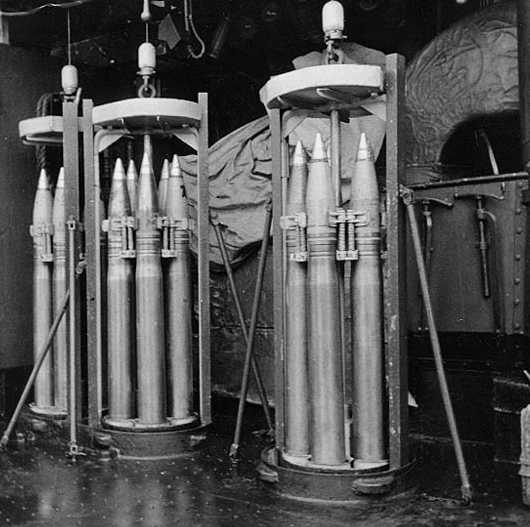
- ^Outfit for warships was HE and HE incendiary, both nose fuzed and with or without tracer. Illumination rounds were also carried. Depot ships included AP rounds in their outfits, but this was rarely carried by warships.
| Elevation | Range |
|---|---|
| 45 degrees | 19,357 yards (17,700 m) |
| AA Ceiling @ 80 degrees | 41,010 feet (12,500 m) |
| Designation | Twin Mounts on German Ships 1b 2b Lützow (3): Dop. L. C/31 3b Scharnhorst (7): Dop. L. C/31gE 4b Admiral Hipper (6) and Prinz Eugen (6) 5b: Dop. L. C/31d 6b Bismarck 7b 8b Forward mountings (4): Dop. L. C/31d Aft mountings (4): Dop. L. C/37 9b 10b Tirpitz 8b Forward mountings (6): Dop L. C/37 Aft mountings (2): Dop. L. C/31d 11b Graf Zeppelin (4), Seydlitz (5 - as aircraft carrier), Bauer (1), Lüderitz (1) and Nachtigal (1): Dop. L. C/37 "H" (8): Dop. L. C/38 12b Twin Mounts on French Ships
|
|---|---|
| Weight 14b | Dop. L. C/31 and Dop. L. C/31gE: 61,300 lbs. (27,805 kg)
Dop. L. C/31d: 60,300 lbs. (27,350 kg) Dop. L. C/37: 58,260 lbs. (26,425 kg) Dop. L. C/38: about 97,000 lbs. (44,000 kg) |
| Elevation | Dop. L. C/31, Dop. L. C/31gE and Dop. L. C/31d: -8 / +80 degrees
Dop. L. C/37 and C/38: -10 / +80 degrees 15b |
| Elevation Rate | Dop. L. C/31, Dop. L. C/31gE and Dop. L. C/31d: 10 degrees per second
Dop. L. C/37 and C/38: 12 degrees per second |
| Train | 360 degrees |
| Train Rate | Dop. L. C/31, Dop. L. C/31gE and Dop. L. C/31d: 8.0 degrees per second
Dop. L. C/37: 8.5 degrees per second Dop. L. C/38: 10 degrees per second (20 degrees per second slew speed) |
| Cross Leveling | - 17 / +17 degrees |
| Cross Leveling Rate | Dop. L. C/31: 5 degrees per second
Dop. L. C/37: 8 degrees per second Dop. L. C/38: 10 degrees per second |
| Recoil | Dop. L. C/31: 16.1 in (41 cm) max
Dop. L. C/37: 15.0 in (38 cm) max Dop. L. C/38: 15.7 in (40 cm) max |
- ^Twin mounts had a crew of six on-mount plus ammunition passers.
- ^The Kriegsmarine designated these mountings in their standard fashion for secondaries with starboard mountings being Stb I (forward) through Stb IV (aft) and port mountings being Bb I (forward) through Bb IV (aft).
- ^The original 10.5 cm Dop. L. C/31 mounting was the 8.8 cm Dop. L. C/31 mounting reworked to take the larger gun. This mounting had both guns in a single cradle. The C/31 series can be distinguished from the later Dop. L. C/37 by their shorter shield and by the C/37 having a partial shield over the gun breeches.
- ^Experience gained during the Spanish Civil war resulted in the improved Dop. L. C/31gE mounting which had each gun in its own cradle. The mountings were trained via electrically driven hydraulic gear while the elevation and cross-leveling gear were all electric. Elevation was partially RPC and the cross-leveling was fully RPC. The loading gear used an electric motor on the cradle to drive a continuously running roller above the bore with an idler roller in the breech block. These helped to ram the rounds into the breech.
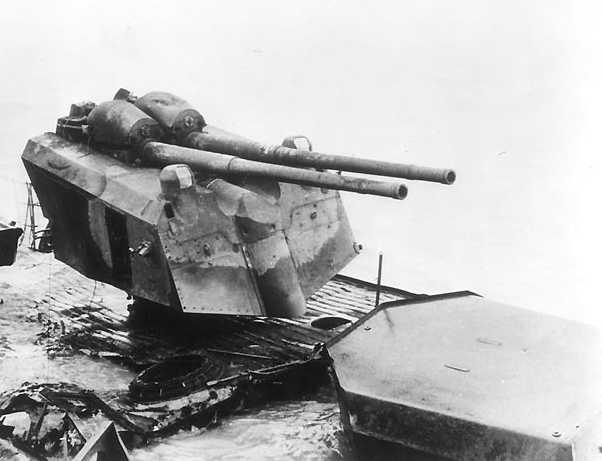
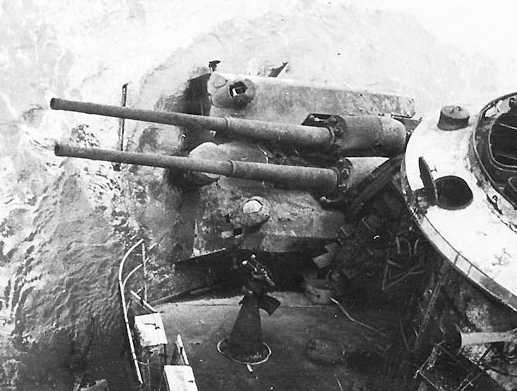
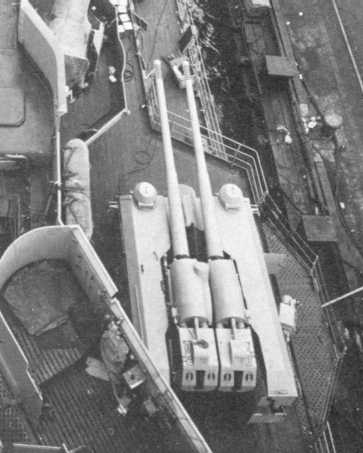
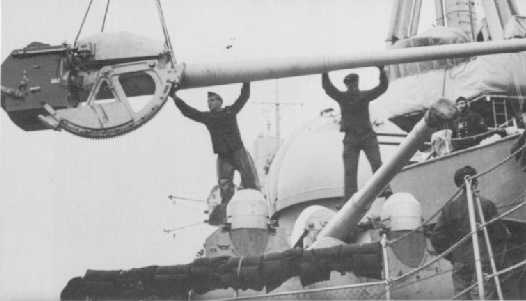
- ^A note on sources: "Heavy Cruisers of the Admiral Hipper Class: Warships of the Kriegsmarine" by Gerhard Koop and Klaus-Peter Schmolke state that Prinz Eugen may have had Dop. L. C/37 mounts. However, post-war photographs of her (see below) clearly show that she was armed with Dop. L. C/31d mountings, the same as her earlier sisters. This same source states that unfinished sister-ships Seydlitz and Lützow would have used the Dop. L. C/37 mountings. This is more likely, as the Dop. L. C/37 was being introduced into service use in 1941 on Bismarck and Tirpitz.
- ^The Dop. L. C/31d mounting was derived from the Dop. L. C/31gE mounting and differed by slight changes to the equipment and shield.
- ^The mixing of Dop. L. C/31 and Dop. L. C/37 mountings on Bismarck may partially account for her poor showing against British aircraft during her only operational sortie. These mounts had different training and elevating characteristics that were apparently not accounted for in her AA fire control systems.
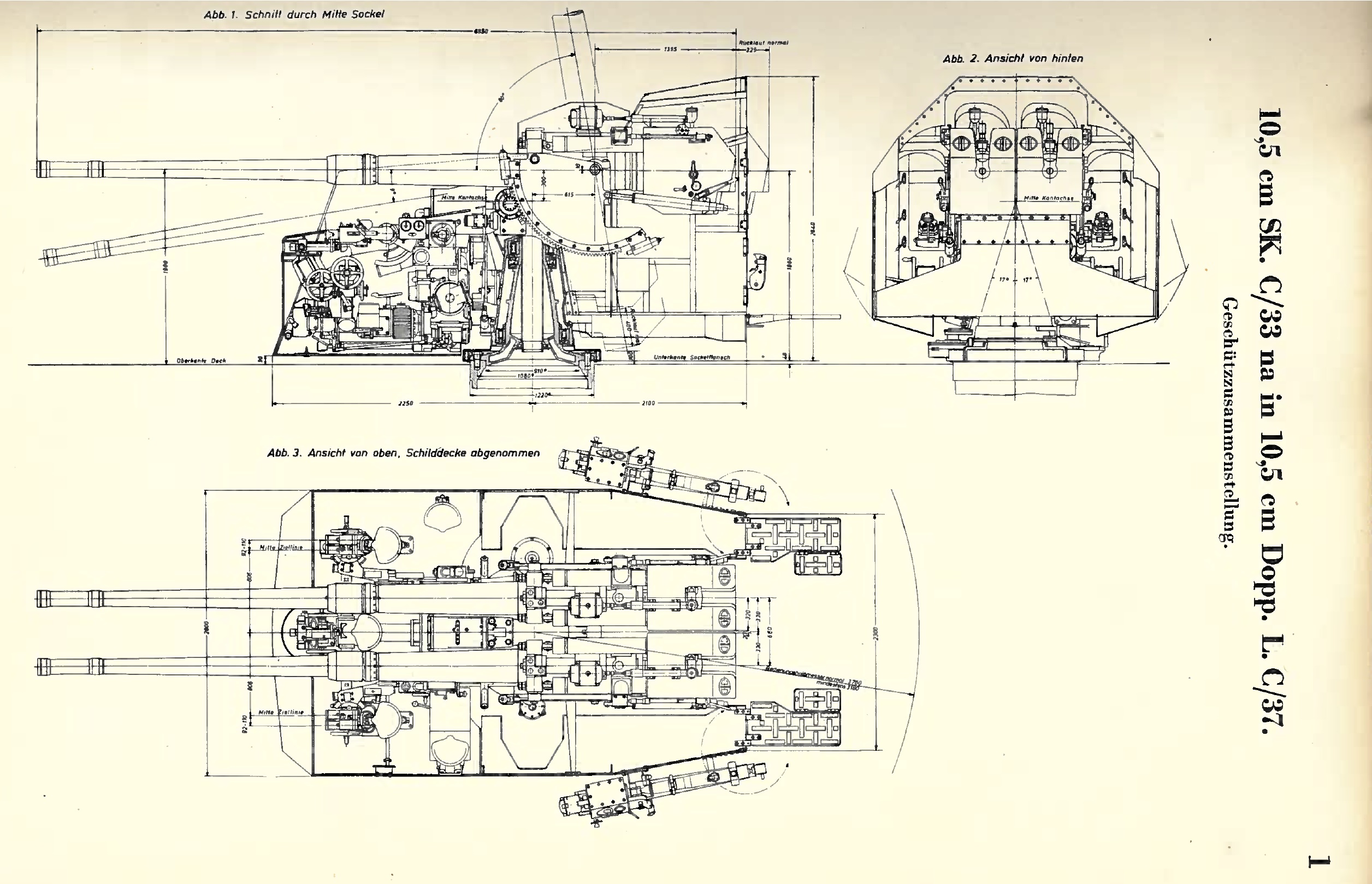
- ^The Dop. L. C/37 had both guns in a single cradle, reducing the spacing between gun barrels from the previous mountings.
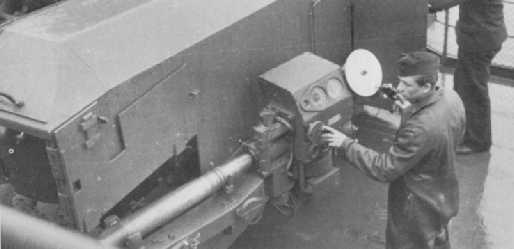
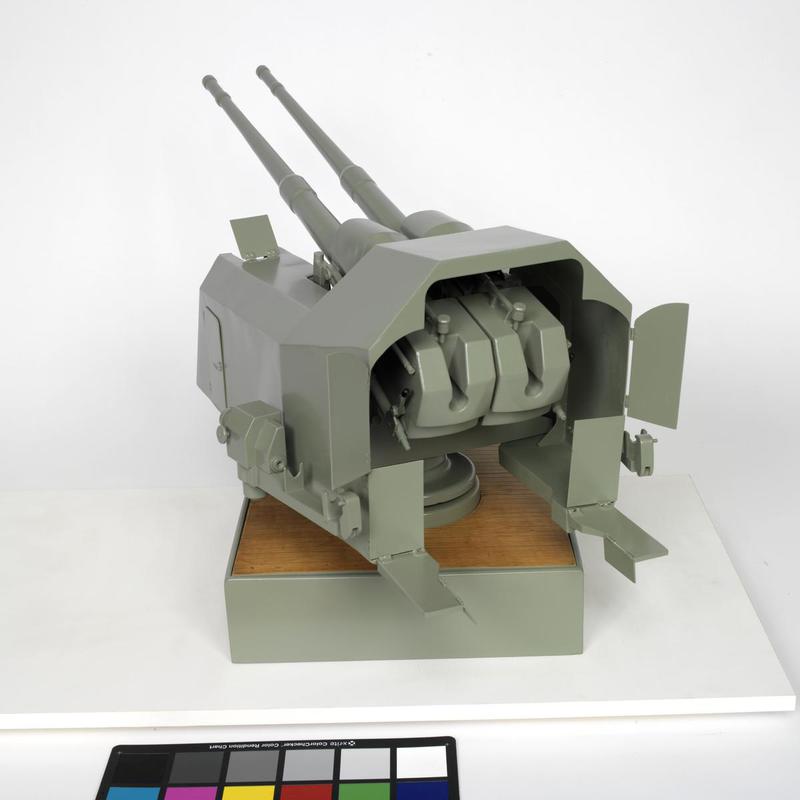
- ^A note on sources: "German Naval Guns: 1939 - 1945" says that the fuze setters for the Dop. L. C/37 were mounted inside the shield, but the sketches in this book for these mounts show these machines on the outside of the shield. Other sources say that the fuze-setters were on the outside of the shield. Photographs of these mountings on Bismarck seem to show the fuze-setters on the outside of the shield, similar to how they were assembled on the Dop. L. C/31 mountings. The model of the Dop. L. C/37 now at the Imperial War Museum (see photograph below) also shows the fuze-setters on the outside of the shield.
- ^Tirpitz was originally fitted with two Dop. L. C/31d mounts but these were replaced in late 1941 giving her a uniform battery of eight Dop. L. C/37 mounts. As noted above, this mixing of mounting types may not have been accounted for in her AA fire control systems, so changing to a uniform battery would have improved her AA defense capabilities.
- ^The Dop. L. C/38 was an all-electric true turret with full RPC and was to have hoists on the outside of each gun supplying rounds horizontally with automatic loading. One long trunk and one short trunk prototype were completed for evaluation, but the production units were cancelled along with the "H" class battleships. Guns appear to have been in separate cradles.
- ^In 1956 - 1957 the French Guichen and Châteaurenault were converted to flotilla leaders and traded their No. 3 mounting for additional accommodation space. Albatros replaced her 10.5 cm mounting with the prototype of the new 100 mm Model 1945 twin mounting.
- ^The sources below differ as to the weight of these mountings. For the most part, I have chosen to use the weights given in "German Naval Guns: 1939 - 1945."
- ^A note on sources: "Battleships: Axis and Neutral Battleships in World War II" credits the Dop. L. C/37 and Dop. L. C/38 mounts with -15 / +85 degrees elevation.
Spacing between gun axes Dop. L. C/31 26.8 in (68 cm) Dop. L. C/37 26.0 in (66 cm) Dop. L. C/38 38.2 in (97 cm)
"Naval Weapons of World War Two" by John Campbell
"The Postwar Naval Revolution" by Norman Friedman
"Battleships: Axis and Neutral Battleships in World War II" by W.H. Garzke, Jr. and R.O. Dulin, Jr.
"German Warships 1815 - 1945" by Erich Gröner
"French Cruisers: 1922 - 1956" and "French Destroyers: Torpilleurs d'Escadre & Contre-Torpilleurs 1922 - 1956" both by John Jordan and Jean Moulin
"German Naval Guns: 1939 - 1945" by Miroslaw Skwiot
"German Capital Ships of World War Two" and "German Cruisers of World War Two" both by M.J. Whitley
"Warship Pictorial #21: Kriegsmarine Prinz Eugen" by Steve Wiper
---
"Unterrichtstafeln für Geschützkunde - Band II Flak: Zusammengestellt bei der 1. Abtlg. S.A.S. 1942" by Oberkommando der Kriegsmarine
---
Special help from Thorsten Wahl
10 September 2007 - Benchmark
26 January 2009 - Added gun information and ship usage
17 February 2010 - Corrected number of mountings on Scharnhorst, miscellaneous changes
05 June 2011 - Updated data for Tirpitz mountings and added note about practice gun
29 March 2013 - Added information about Châteaurenault
15 December 2013 - Added photograph of 10.5 cm model
08 October 2015 - Added information about Albatros
23 February 2018 - Converted to HTML 5 format and reorganized notes
10 February 2019 - Added additional information on mountings, small changes in the ammunition section, added photograph of
gun mount on Admiral Hipper
10 March 2019 - Added dimensional sketch of Dopp. L. C/37 mounting
18 August 2024 - Added burster weight